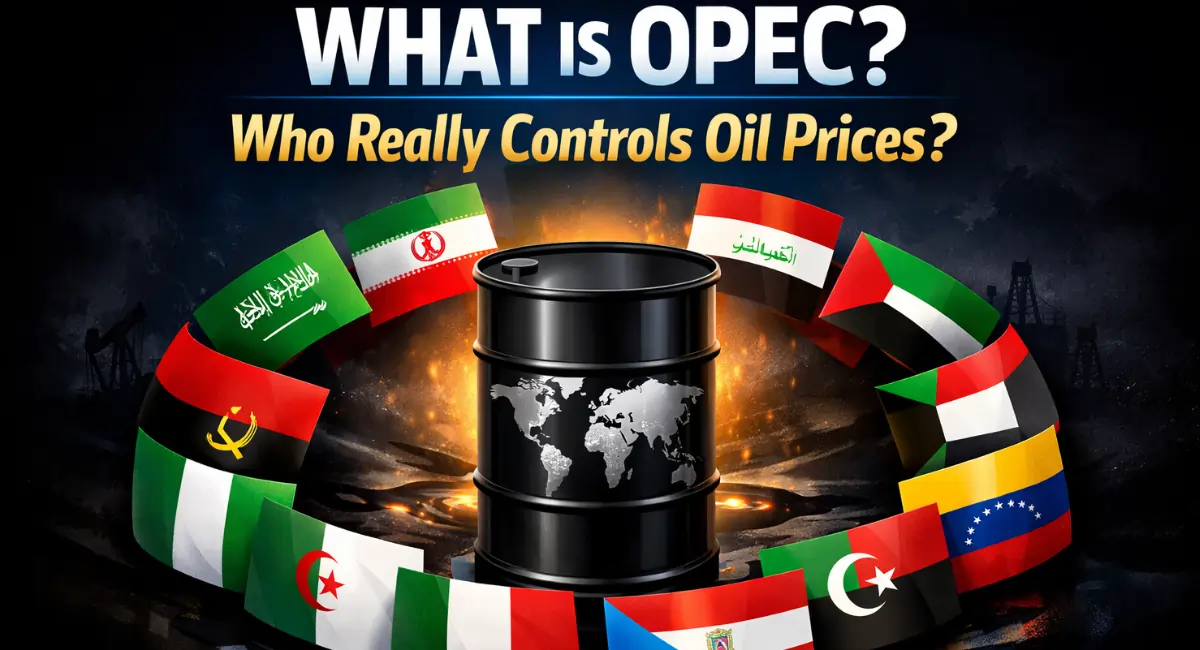
What Is OPEC? Countries, Advantages, and Disadvantages Explained Simply
The Organization of the Petroleum Exporting Countries (OPEC) is an intergovernmental organization made up of major oil-producing nations. It plays a crucial role in shaping global oil markets by coordinating petroleum policies among its member countries.
If you work in oil & gas, energy trading, or even follow fuel prices closely, understanding OPEC is essential because its decisions can directly influence crude oil prices worldwide.
What Is OPEC?
OPEC was founded in 1960 in Baghdad by five countries: Iran, Iraq, Kuwait, Saudi Arabia, and Venezuela.
Its primary objective is to coordinate oil production policies among member nations to ensure stable oil markets.
Today, OPEC consists of 13 member countries and has its headquarters in Vienna, Austria.
What Is the Purpose of OPEC?
OPEC’s main purpose is to manage oil supply in a way that balances the interests of:
Oil-producing countries (stable revenue)
Oil-consuming countries (reliable supply)
Investors in the oil industry (fair returns)
In simple terms, OPEC tries to avoid extreme oil price volatility by adjusting how much oil its members produce.
Key Goals of OPEC
- Coordinate oil production through output targets
- Reduce sharp price fluctuations
- Prevent oil shortages or oversupply in global markets
A Brief History of OPEC
OPEC’s influence grew significantly during the 1970s, especially during major oil crises:
- 1973 Oil Crisis – OPEC imposed an oil embargo, causing prices to surge
- 1979 Oil Crisis – Iranian Revolution disrupted oil supply
- 1980s–1990s – Oil prices weakened due to oversupply
- 2008 – Prices peaked before the global financial crisis
- 2014–2016 – Prices collapsed due to U.S. shale oil boom
- 2020 – COVID-19 caused demand collapse; oil prices turned negative
- 2022 onwards – Recovery driven by economic rebound and geopolitics
Who Are the OPEC Members?
Current OPEC Member Countries (13)
- Saudi Arabia
- Iran
- Iraq
- Kuwait
- United Arab Emirates
- Venezuela
- Nigeria
- Libya
- Algeria
- Angola
- Congo
- Equatorial Guinea
- Gabon
Some countries like Qatar, Ecuador, and Indonesia, were members earlier but later exited the organisation.
What Is OPEC+?
OPEC+ is an expanded alliance formed in 2016, combining:
All OPEC members
10 major non-OPEC oil-producing countries
This group controls over 55% of global oil production.
Key OPEC+ Members Outside OPEC
Russia
Kazakhstan
Oman
Mexico
Azerbaijan
Malaysia
Russia plays a major role due to its large production capacity.
What Is an OPEC Meeting?
OPEC holds regular ministerial meetings, usually at least twice a year.
During these meetings, members decide:
- Oil production levels
- Output increases or cuts
- Market stabilization strategies
These decisions often cause immediate movements in global oil prices.
Advantages of OPEC
- Better cooperation among oil-producing섭
- Reduced risk of oil price wars
- More stable oil markets
- Predictable supply for importing countries
- Reliable market data and outlook reports
Disadvantages of OPEC
- Not all members strictly follow production limits
- Larger producers have more influence
- Smaller members lose pricing freedom
- Short-term price manipulation concerns
How Does OPEC Affect Oil Prices?
OPEC influences oil prices mainly by controlling supply:
- Lower production → higher prices
- Higher production → lower prices
While long-term prices depend on global supply and demand, OPEC can significantly affect short-term market movements, especially during geopolitical or economic uncertainty.
Is the United States Part of OPEC?
No.
The United States is not a member of OPEC.
Although the U.S. is one of the world’s largest oil producers and consumers, it follows a market-driven production system rather than coordinated output controls.
Conclusion
OPEC remains one of the most influential organisations in the global energy sector. By coordinating oil production among major producers, it helps shape oil prices, market stability, and long-term energy security. For anyone involved in oil & gas, LNG, or energy markets, understanding OPEC is not optional it is essential.
Changes in global oil prices directly impact LNG import costs and natural gas pricing in India.
One thought on “What Is OPEC? Countries, Advantages, and Disadvantages Explained Simply”