LNG Rapid Phase Transition (RPT): What It Is, Why It Happens, and Why It Matters
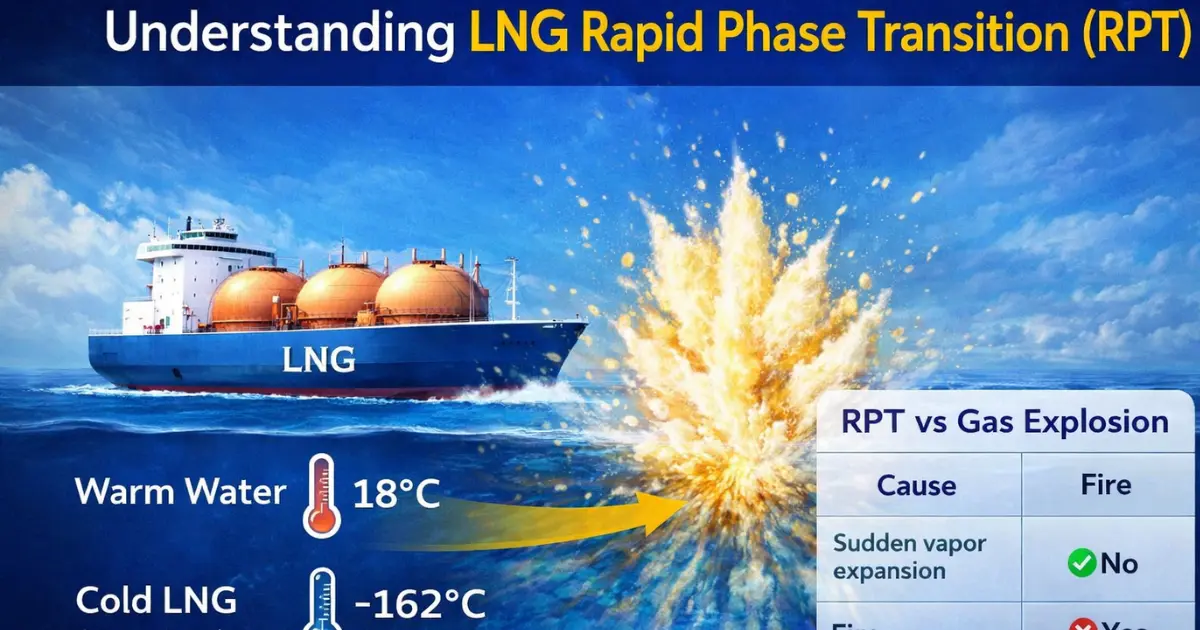
LNG Rapid Phase Transition (RPT) is a physical phenomenon that occurs when extremely cold liquefied natural gas suddenly comes into contact with warmer water, creating rapid vapour expansion and strong pressure waves. LNG plays a major role in global energy supply, but handling it safely requires understanding certain unique physical risks. One of the most important — and sometimes misunderstood — is Rapid Phase Transition (RPT).
RPT is not a chemical explosion or fire. Instead, it is a powerful physical explosion that can occur when extremely cold LNG suddenly comes into contact with much warmer water.
What Is LNG Rapid Phase Transition (RPT)?
Rapid phase transition happens when LNG instantly changes from liquid to gas due to a sudden temperature difference.
LNG is stored at around –162°C, making it extremely cold. When it spills onto warmer water—such as the sea—the heat transfer is so fast that the liquid LNG quickly boils and expands into gas.
Because natural gas expands roughly 600 times in volume when it turns from liquid to gas, this sudden expansion can create a strong pressure wave — similar to a blast.
How Does RPT Happen? (Simple Explanation)
Here’s the basic process:
- LNG spills or leaks onto water.
- The warm water rapidly heats the LNG.
- LNG instantly vaporises and expands very quickly.
- The rapid expansion creates a powerful physical shock or blast.
No burning or ignition is required — it is purely caused by extreme temperature difference and fast vapour expansion.
Where Can RPT Occur?
RPT risk mainly exists in situations where LNG can contact water, such as:
- LNG ship loading or unloading operations
- Storage tank leaks near coastal areas
- Accidental spills during transport
- Offshore LNG terminals
It is especially important in marine environments because oceans and rivers provide large heat sources.
Is RPT Dangerous?
Yes, but in a specific way.
RPT can cause:
- Strong pressure waves
- Loud explosions
- Equipment damage
- Risk to workers nearby
However, it does not produce flames unless gas later ignites. The danger is mechanical force, not fire.
Why Understanding RPT Is Important
As global LNG use increases, so do large-scale storage, shipping, and handling. Understanding RPT helps industries:
- Design safer LNG terminals
- Improve emergency planning
- Train workers properly
- Reduce accident risks
International safety standards and handling guidelines are developed by organisations such as the International Maritime Organization and the National Fire Protection Association to minimise these risks.
How Industries Prevent RPT
Modern LNG facilities use strict safety measures, including:
✔ Spill containment systems
✔ Controlled loading procedures
✔ Protective barriers between LNG and water
✔ Advanced monitoring sensors
✔ Emergency shutdown systems
These precautions significantly reduce the chance of sudden LNG–water contact.
Click here to read more about the difference between LNG vs CNG vs PNG
Key Difference: RPT vs Gas Explosion
Many people confuse RPT with a gas explosion. They are different:
| Feature | Rapid Phase Transition | Gas Explosion |
|---|---|---|
| Cause | Sudden vapor expansion | Ignition of flammable gas |
| Fire involved | No | Yes |
| Type of energy | Physical pressure | Chemical combustion |
Final Thoughts
LNG rapid phase transition is a powerful but predictable physical phenomenon caused by extreme temperature differences. While it can create strong explosions, modern engineering and strict safety practices make LNG handling much safer than in the past.
Understanding RPT is essential as LNG continues to grow as a key global energy source — especially for countries expanding imports, exports, and marine transport.
Rapid Phase Transition events have been observed during LNG ship unloading operations and accidental marine spills. While large-scale RPT incidents are rare, small physical explosions have been recorded during LNG testing and training exercises. These examples highlight why strict operational controls, trained personnel, and emergency procedures are essential in LNG terminals and transport operations.
With the global expansion of LNG infrastructure, operators must understand RPT behaviour to protect workers, vessels, and equipment.