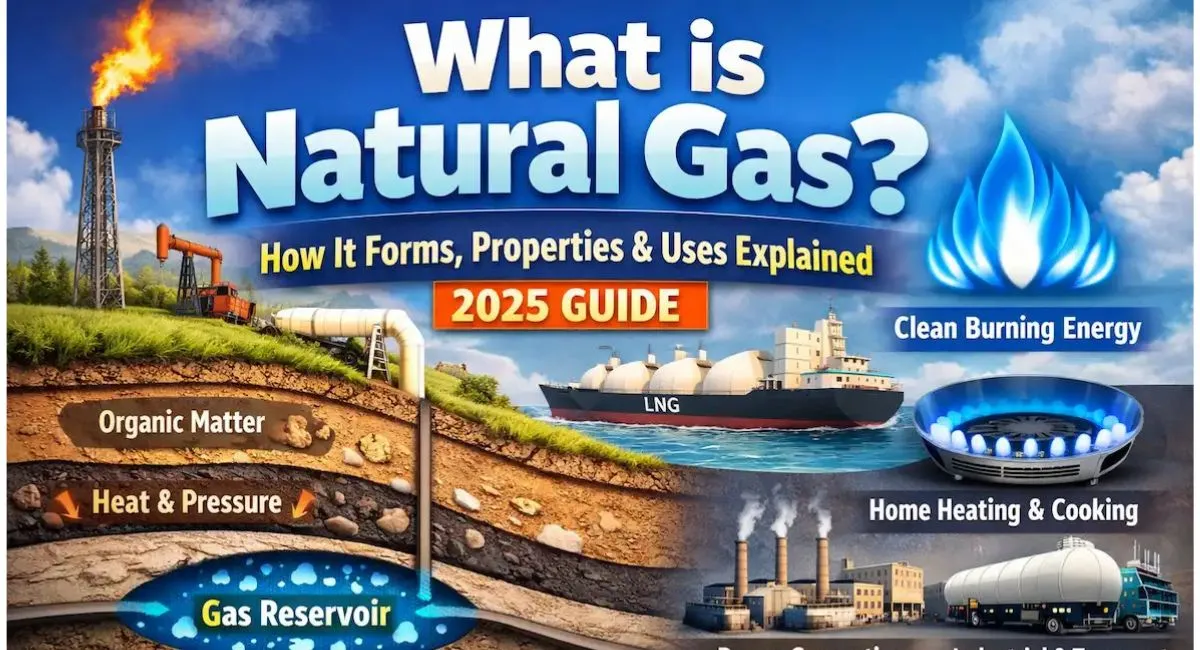
What Is Natural Gas?How It forms,Properties&Uses Explained (2025 Guide)
What Is Natural Gas?
Natural gas is a naturally occurring hydrocarbon gas mixture primarily composed of methane (CH₄), along with smaller amounts of ethane, propane, carbon dioxide, nitrogen, and trace gases. It is one of the cleanest-burning fossil fuels and plays a major role in global energy systems, powering industries, households, and transportation.Lightweight, colorless, and naturally odorless, natural gas has become a cornerstone of the world’s transition toward cleaner and more efficient energy sources.
How Natural Gas Forms?
Natural gas is formed through a slow geological process that spans millions to hundreds of millions of years.Natural gas originates from the remains of dead plants and marine microorganisms that settled on the ocean floor millions of years ago. Over time, these layers of organic material were buried under thick deposits of sand, silt, and rock. As they sank deeper into the Earth, they were exposed to extreme heat and pressure, which gradually transformed the material into hydrocarbons. The depth and temperature of burial play a major role in determining what is formed—shallower layers typically produce oil, while deeper and hotter conditions lead to the formation of natural gas. This slow geological transformation is known as thermal maturation, a natural process that stores the sun’s ancient energy inside methane and other hydrocarbons.
Where Do We Find Natural Gas?
Natural gas occurs in several types of geological formations:
1. Conventional Gas ReservoirsFound in porous rock formations, often alongside crude oil.
2. Unconventional gas sources:Shale gas trapped within shale rock
Composition and Key Properties of Natural Gas?
- – Methane (CH₄): 70–98%
- -Ethane, propane, and butane: small amounts
- -Inert gases: Nitrogen, carbon dioxide
- -Trace elements: Hydrogen sulfide, helium
Important physical properties:
yes,gaseous at normal temperature and pressure
- -Color: Colorless
- -Smell: Naturally odorless (odor added for safety)
- -Density: Lighter than air
- – Flammability range: 5–15%
- -Ignition temperature: Around 540°C
- -Calorific Value: 8,000–9,500 kcal/Sm³
How Natural Gas Is Processed?
Before reaching consumers, natural gas must be purified:
- -Removal of water and oil
- -Sweetening – removing H₂S and CO₂
- -Dehydration – eliminating moisture
- -Separation of natural gas liquids (NGLs)
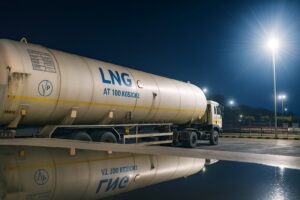
- -Liquefaction (if producing LNG) at −162°c
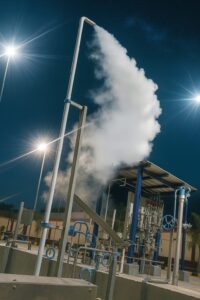
During petroleum extraction, a significant amount of natural gas is released along with crude oil. In many cases, this gas is flared, meaning it is burned off at the wellsite when infrastructure to collect or transport it is not available. Although flaring prevents dangerous pressure buildup, it also wastes a valuable energy resource.
Before natural gas can be used as a fuel or as a feedstock in industries, it must go through extensive processing. Raw natural gas usually contains several impurities—most commonly water vapor, which must be removed to prevent corrosion, hydrate formation, and pipeline blockages.
As the gas is purified, a number of useful byproducts are extracted. These include ethane, propane, butane, pentane, and heavier hydrocarbons, collectively known as natural gas liquids (NGLs). In addition, unwanted components such as hydrogen sulfide, carbon dioxide, nitrogen, helium, and excess water are separated out. Hydrogen sulfide, when present, is typically converted into elemental sulfur using specialized processes.
Natural gas is often referred to simply as “gas”, especially in discussions comparing it with other energy sources like coal, oil, or renewables. However, it should not be confused with gasoline, which is also called “gas” in everyday language, particularly in North America.
To quantify natural gas, industries measure it in standard cubic meters (SCM) or standard cubic feet (SCF). Its density varies based on composition but is generally lower than that of air—typically around 0.58 to 0.64 times the density of air. For reference, pure methane—the primary component of natural gas—has a density roughly 0.55 times that of air.
Sources:U.S.Energy Information Administration(EIA) Link:https://www.eia.gov
http://www.pngrb.gov.in
4 thoughts on “What Is Natural Gas?How It forms,Properties&Uses Explained (2025 Guide)”