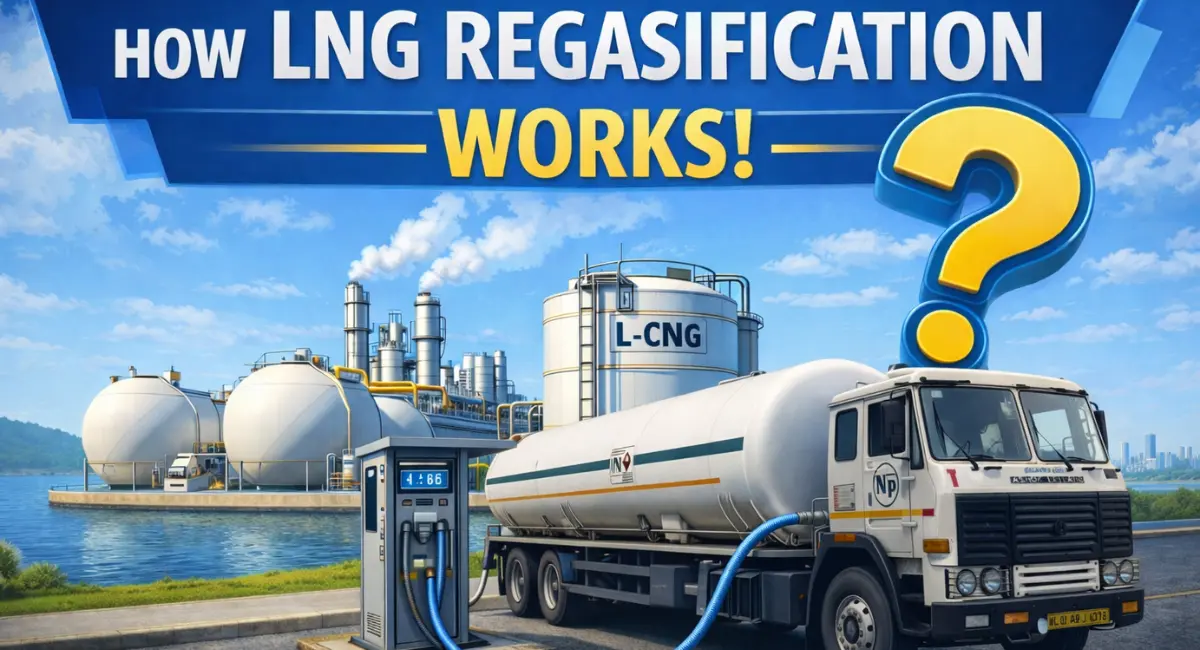
How LNG Regasification Works (Step-by-Step)
Liquefied Natural Gas (LNG) has become a key part of the global energy system, especially for countries and areas that do not have direct access to natural gas pipelines. LNG allows natural gas to be transported safely over long distances by sea. However, before LNG can be used in homes, industries, or power plants, it must be converted back into its gaseous form. This process is known as LNG regasification. LNG is converted to gas in LNG plants.
According to international energy assessments, LNG regasification terminals play a critical role in ensuring energy security and enabling flexible global natural gas trade, especially for countries without pipeline connectivity.
This article explains how LNG regasification works, step by step, in a simple and easy-to-understand way.
What Is LNG Regasification?
LNG regasification is the process of converting liquefied natural gas (stored at around –162°C) back into natural gas by warming it and adjusting its pressure so it can be safely transported through pipelines.
Regasification is carried out at onshore LNG terminals or Floating Storage and Regasification Units (FSRUs). Or long plants
Step-by-Step LNG Regasification Process
Step 1: LNG Arrival at the Terminal
LNG is transported in specially designed cryogenic ships. These ships arrive at a regasification terminal, where the LNG is unloaded using insulated pipelines. Also LNG mobile carriers, i.e., trucks, load LNG from the terminal, and they go to the LNG plant, which is situated where gas is needed readily where a pipeline is not available for supply.
Step 2: LNG Storage
After unloading, LNG is stored in large, double-walled cryogenic storage tanks. These tanks are designed to maintain extremely low temperatures and minimise heat entry. Also, LNG trucks also carry LNG, and first they store it in vertical mini cryogenic tanks which are situated in LNG plants.
A small amount of LNG naturally evaporates, or using ambient vaporisers in LNG plants produces boil-off gas (BOG), which is collected and managed safely.
Step 3: LNG Pumping
Before regasification, LNG is pumped using high-pressure cryogenic pumps.
This step increases the LNG pressure to match the pressure required in gas transmission pipelines, after which it is given to the vaporiser inlet.
Step 4: Vaporization (Regasification)
The high-pressure LNG is then sent to vaporisers, where it is heated and converted back into gas.
Common types of vaporisers include:
- Open Rack Vaporizers (ORV): Use seawater as a heat source
- Submerged Combustion Vaporizers (SCV): Use heat from gas combustion
- Ambient Air Vaporizers (AAV): Use surrounding air temperature
During this stage, LNG changes from liquid to gas. Before LNG enters storage tanks at the terminal, it is safely transferred from LNG carriers through a controlled unloading process. Readers can explore this in detail in our guide on the LNG tanker unloading process
Step 5: Gas Heating and Conditioning
After vaporisation, the gas is further heated if required to meet pipeline temperature standards. It is not mandatory.
Pressure, flow rate, and composition are adjusted. Also, odorants are added to help detect gas leaks.
Step 6: Metering and Quality Checks
Before entering the pipeline network, the gas passes through metering systems. usually a mass flow meter
These systems measure:
- Gas flow rate
- Pressure
- Temperature
- Gas composition
This ensures the gas meets national and international pipeline specifications.
Step 7: Send-Out to Gas Pipelines
Finally, the re-gasified natural gas is injected into transmission pipelines from the vaporiser outlet
From there, it is supplied to:
- Power plants
- Industrial users
- City gas distribution networks
- Commercial and residential consumers
Simple Regasification Flow
Why LNG Regasification Is Important
- Enables natural gas supply to countries without pipelines
- Improves energy security
- Supports cleaner energy transition compared to coal and oil
- Allows flexible global gas trade
Conclusion
LNG regasification is a critical link between global LNG transportation and local natural gas consumption. By carefully controlling temperature, pressure, and safety systems, regasification terminals ensure that LNG is converted back into usable natural gas efficiently and safely.
As demand for cleaner energy continues to grow, LNG regasification will remain a vital part of the global energy infrastructure, supported by the expansion of LNG import terminals across India that enable reliable natural gas supply to power plants, industries, and city gas networks.
6 thoughts on “How LNG Regasification Works (Step-by-Step)”