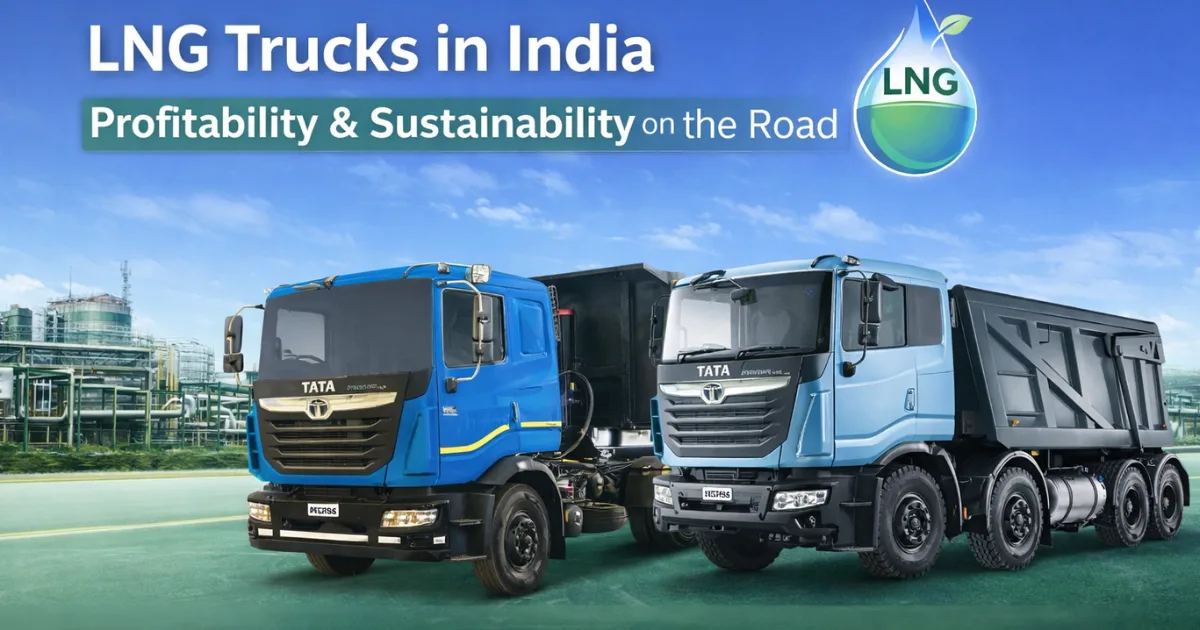
LNG Trucks in India: How LNG Is Transforming Heavy Transport with Higher Profitability and Cleaner Logistics
LNG trucks in India are rapidly transforming the commercial vehicle landscape as rising diesel prices and stricter emission norms push fleet operators toward cleaner mobility. Liquefied Natural Gas (LNG) is emerging as a powerful solution for long-haul and high-tonnage applications — offering better performance, lower operating costs, and reduced emissions. Rising diesel prices, stricter emission norms, and the push toward sustainable mobility are rapidly changing India’s commercial vehicle landscape. Among alternative fuels, Liquefied Natural Gas (LNG) is emerging as a powerful solution for long-haul and high-tonnage applications — offering better performance, lower operating costs, and reduced emissions.
Modern LNG-powered trucks combine strong torque delivery with cleaner combustion, making them ideal for logistics operators looking to improve margins while meeting environmental goals.
Why LNG Delivers Better Performance Than Diesel
One of LNG’s biggest advantages is its higher calorific value compared to diesel, which translates directly into improved engine performance and fuel efficiency. Operators benefit from:
- Strong pulling power for heavy loads
- Smoother combustion and reduced engine stress
- Lower fuel cost per kg versus diesel, boosting overall profitability
Because LNG is stored as a cryogenic liquid, it also provides pilfer-proof fuelling, helping fleet owners reduce operational losses and gain peace of mind.
In addition, LNG’s higher volumetric efficiency allows for smaller and lighter fuel tanks, enabling higher payload capacity — a major advantage for transporters focused on maximising revenue per trip.
LNG and Sustainable Logistics
Beyond economics, LNG supports greener transportation.
Compared to diesel trucks, LNG-powered vehicles can deliver:
- Up to 25% lower CO₂ emissions
- Significant reduction in NOx, particulate matter, and carbon monoxide
- Cleaner exhaust with improved air quality impact
This makes LNG an attractive pathway toward sustainable logistics, especially for regional and long-haul freight corridors.
Government policy initiatives and expanding LNG retail infrastructure across India are further accelerating adoption, positioning LNG as a practical bridge fuel toward low-carbon mobility.
PRIMA LNG Truck Range: Built for Power and Productivity
Advanced LNG trucks are now purpose-built for demanding commercial applications. Two notable models in the PRIMA LNG range demonstrate how LNG technology is being applied in real-world operations.
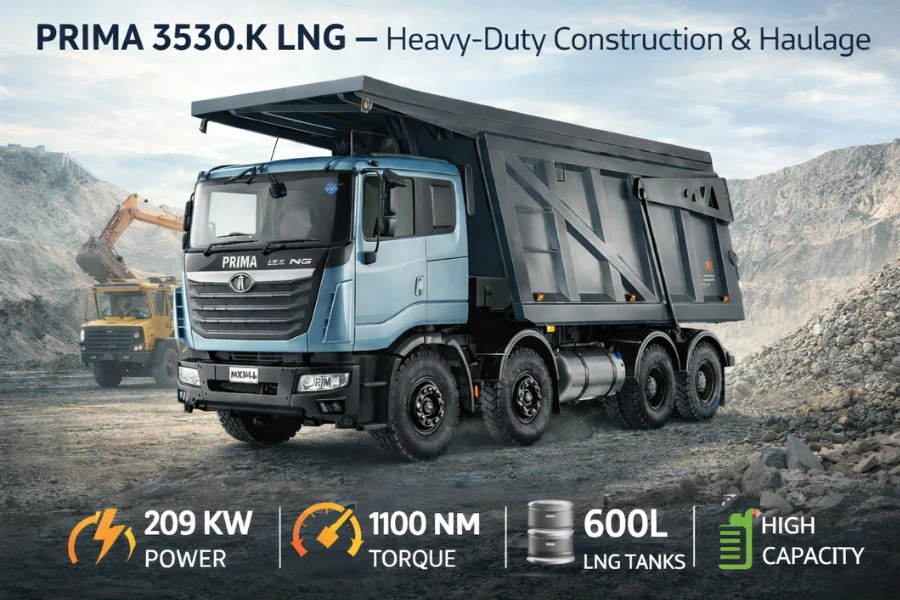
🚛 PRIMA 3530. K LNG – Heavy-Duty Construction & Haulage
Key Specifications
- Power: 209 kW
- Torque: 1100 Nm
- Tank Capacity: Dual 300L cryogenic LNG tanks (600L total)
- Configuration: 8×4
Ideal Applications
- Overburden movement
- Quarry haulage
- Roadwork material supply
- Urban construction projects
This model is designed for tough operating environments, combining high torque with efficient fuel usage for tipper and construction-duty cycles.
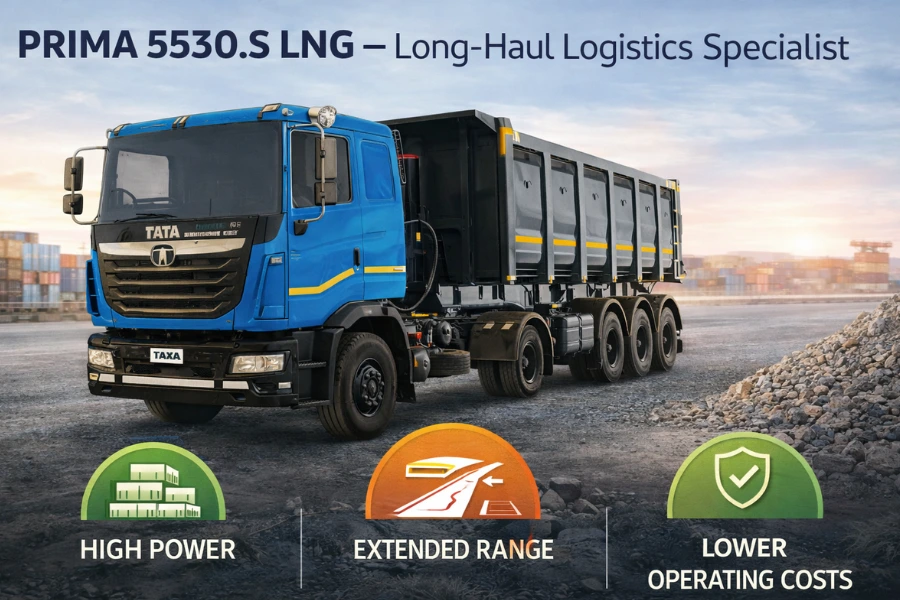
🚛 PRIMA 5530.S LNG – Long-Haul Logistics Specialist
Key Specifications
- Power: 205 kW @ 2300 rpm
- Torque: 1100 Nm at 1200–1700 rpm
- Tank Options: 450L single or 900L twin cryogenic tanks
Ideal Applications
- Container transport
- Bulk goods movement
- Fuel tankers
- Flatbeds and long-haul freight
Built for regional and interstate transport, this LNG tractor offers extended driving range, strong gradeability, and lower total cost of operations for fleet operators.
Lower Total Cost of Operations with LNG
LNG trucks are engineered to reduce lifetime operating expenses through:
- Superior fuel efficiency
- Reduced maintenance requirements
- Favorable LNG-to-diesel price differential
- Advanced telematics and driver assistance systems
- High-capacity cryogenic tanks enabling longer routes
These factors together help achieve payback parity with diesel while allowing operators to “run more and earn more”.
Confused between CNG, LNG, and PNG? Read our detailed article explaining CNG vs LNG vs PNG and their real-world applications.
conclusion
LNG is no longer just an alternative fuel—it is becoming a strategic business choice for heavy transport in India.
With higher calorific value, lower fuel cost, pilfer-proof storage, improved payload capacity, and significantly reduced emissions, LNG-powered trucks deliver both profitability and sustainability.
As LNG infrastructure continues to expand nationwide, vehicles like the PRIMA 3530.K LNG and PRIMA 5530. S LNG are paving the way for a cleaner, smarter, and more efficient logistics ecosystem.
For fleet owners planning the next phase of growth, LNG offers a compelling roadmap toward higher margins and greener operations.