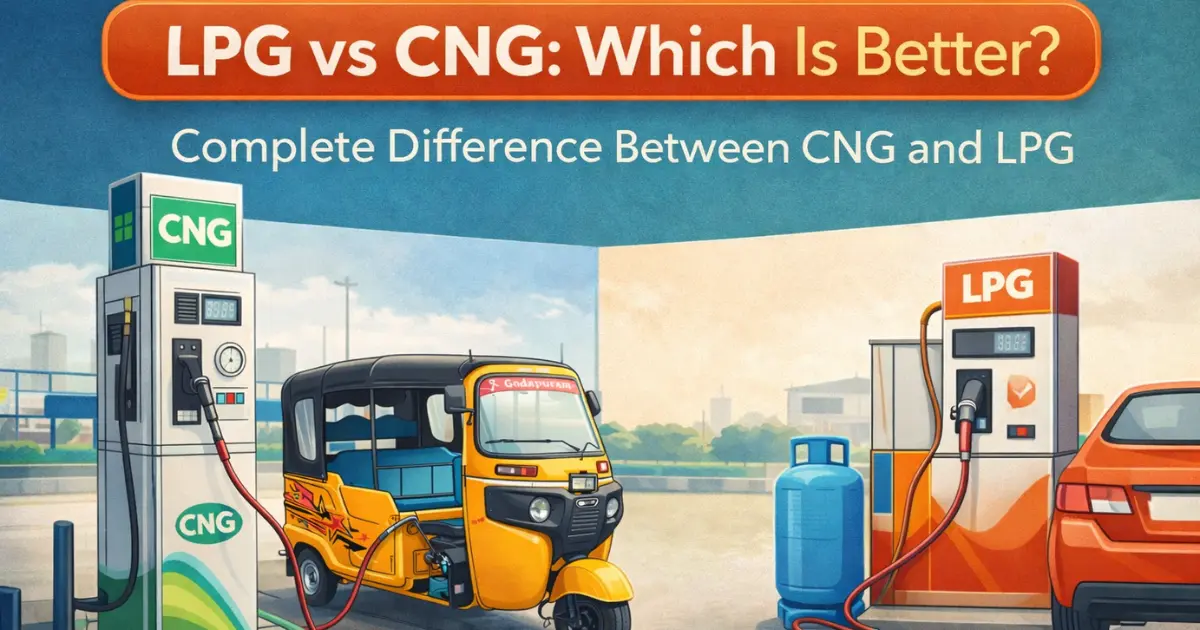
LPG vs CNG: Which Is Better? Complete Difference Between CNG and LPG
LPG vs CNG is a common comparison for vehicle owners and households looking for cleaner fuel alternatives. When evaluating LPG vs CNG, factors such as safety, mileage, emissions, and running cost become important. This LPG vs CNG guide explains how both fuels differ in composition, storage, applications, and performance to help you choose the right option.
CNG (Compressed Natural Gas) is mainly methane compressed to 200–250 bar. It is widely used in vehicles and industries.
- Stored as gas under high pressure
- Cleaner combustion
- Lower running cost
- Used mainly in vehicles
What Is LPG?
LPG (Liquefied Petroleum Gas) is a propane–butane mixture obtained from oil refining and stored as liquid.
- Stored as liquid at lower pressure
- Higher energy density
- Mainly used for cooking
- Used in some vehicles
LPG vs CNG: Key Differences
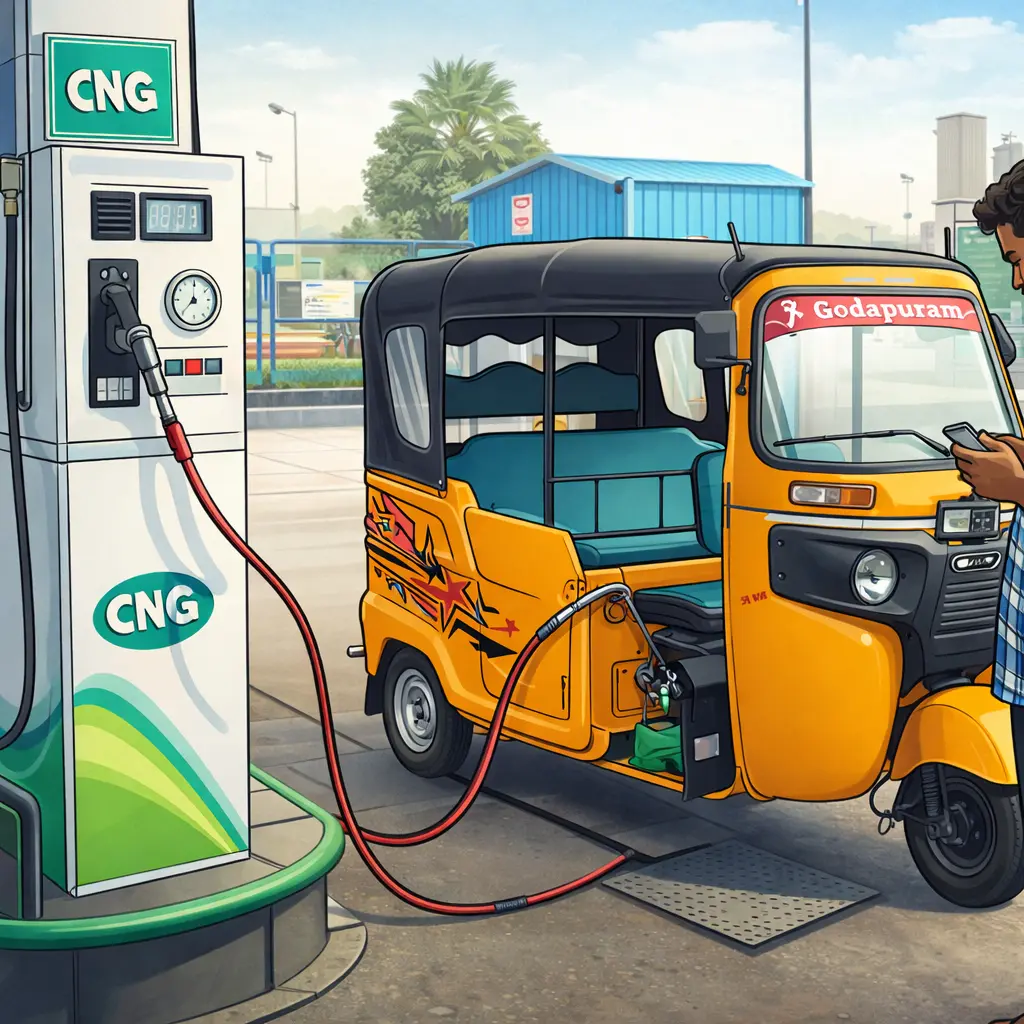
CNG (Compressed Natural Gas) and LPG (Liquefied Petroleum Gas) are two widely used alternative fuels, but they differ significantly in composition, storage, safety, and applications. LPG is a gas mixture of propane and butane obtained during crude oil refining and natural gas processing, making it a by-product of petroleum. CNG, on the other hand, is pure natural gas (mainly methane) that is compressed to very high pressure, typically around 200 bar, whereas LPG is stored as a liquid at much lower pressure, approximately 7.5 to 15 bar.
Also Read: Want to know more about aviation fuel and the types of fuel used in aeroplanes? Click here to explore Jet Fuel, Avgas, and how aircraft are powered
Due to their flammable nature, both gases require robust storage tanks or cylinders to ensure safe transportation and controlled usage. These specially designed cylinders securely contain high-pressure gas and prevent leakage, making everyday use possible in vehicles and homes. One major difference is safety: CNG is lighter than air and disperses quickly in case of leakage, reducing fire risk, while LPG is heavier than air and tends to accumulate near the ground, increasing ignition hazards.
| CNG | LPG |
|---|---|
| Methane | Propane + Butane |
| 200–250 bar pressure | 10–15 bar pressure |
| Higher mileage | Lower mileage |
| Very low emissions | Moderate emissions |
| Safer – lighter than air | Riskier – heavier than air |
Also Read: What is Natural Gas? Composition and Uses Explained
How CNG Is Supplied in India
- CNG is supplied through City Gas Distribution (CGD) companies operating CNG stations across cities.
- Large energy companies like IOCL, GAIL, Adani Total Gas, IGL, MGL, IOAGPL, and other CGD operators manage these networks.
- These companies source natural gas either from domestic gas fields or by importing LNG from other countries.
- Imported LNG is brought to India through LNG terminals, converted back into gas (regasified), and transported via pipelines.
- The gas is then distributed to CNG stations for vehicles and PNG connections for homes and industries.
- This system ensures safe, continuous supply of cleaner fuel across India while supporting reduced emissions and sustainable energy use.
Safety Comparison
❌ LPG accumulates near the ground, increasing fire risk
Vehicle Performance
In terms of usage, CNG is primarily used as an automobile fuel, while LPG is widely used for cooking, heating, and industrial purposes. Although LPG offers a higher calorific value, CNG is generally cheaper and produces fewer greenhouse gas emissions. Both CNG and LPG vehicles can also operate on petrol, providing flexibility when refuelling stations are unavailable. Overall, CNG is considered safer and more environmentally friendly, whereas LPG remains popular due to its energy density and widespread availability.
LPG: Better acceleration, higher power
Advantages and Disadvantages
Advantages of CNG
- Cheapest running cost
- Eco friendly
- Safer
Disadvantages of CNG
- Bulky cylinders
- Limited stations
Advantages of LPG
- Higher engine power
- Compact storage
Disadvantages of LPG
- Higher emissions
- Leak risk
Which Is Better?
✔ Choose LPG for power & limited CNG areas
Conclusion
CNG and LPG both offer cleaner alternatives to petrol and diesel. However, CNG stands out as the smarter long-term fuel for vehicles, while LPG remains ideal for cooking and heating.
Also Read: Confused between gas fuels? Click here to explore the detailed comparison of CNG vs LNG vs PNG covering uses, storage, safety, and applications across India.
One thought on “LPG vs CNG: Which Is Better? Complete Difference Between CNG and LPG”