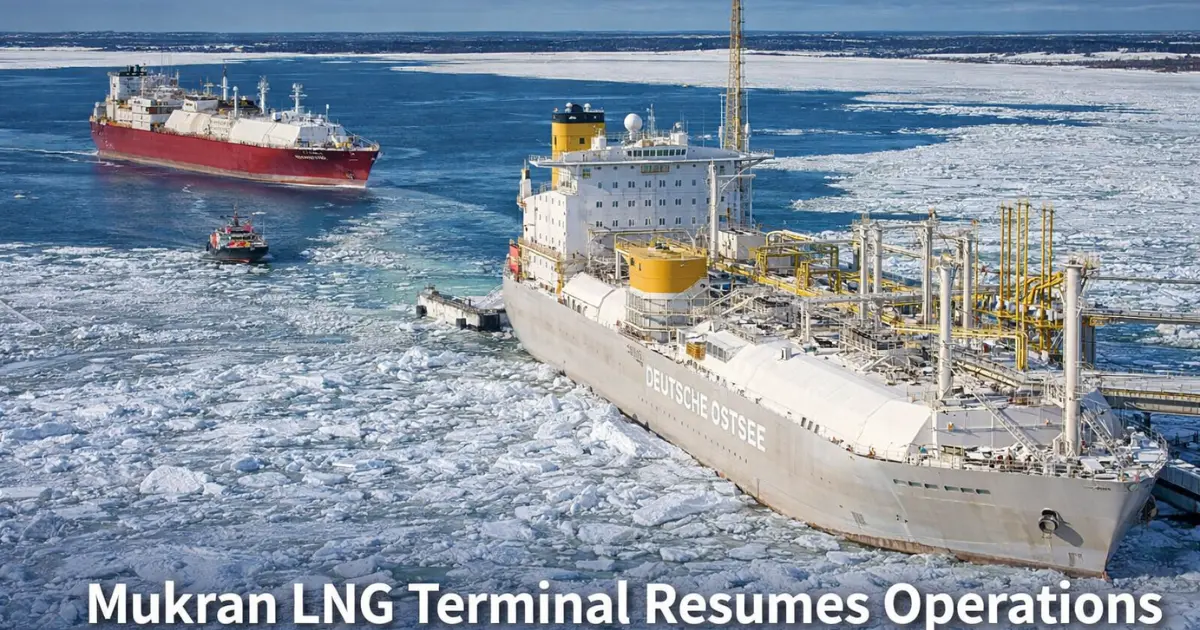
Mukran LNG Terminal Resumes Operations After Baltic Sea Ice Disruption
The Mukran LNG Terminal has resumed operations after weeks of disruption caused by heavy sea ice in the Baltic Sea. Germany’s largest floating LNG import facility had temporarily halted shipping movements as thick ice blocked vessel access near Rügen Island.
Operated by Deutsche ReGas, the Mukran LNG Terminal plays a critical role in Germany’s energy security. The facility functions as a floating storage and regasification unit (FSRU), supplying natural gas directly into the national transmission network.
Why the Mukran LNG Terminal Was Shut Down
The approach channel to the Mukran LNG Terminal became completely blocked due to dense sea ice accumulation. LNG carriers were unable to enter or leave the terminal, forcing operators to suspend gas feed-in operations temporarily.
Satellite images showed ice thickness exceeding 30 cm in several areas. Wind-driven ice ridges nearly reached one metre, making navigation extremely difficult for large LNG vessels.
Icebreaking Efforts Restore Access
To reopen the route, the federal multipurpose vessel Neuwerk was deployed to clear the ice. However, the vessel developed a technical fault and had to return to port for repairs. A tugboat later continued the ice-clearing operations to maintain a navigable corridor.
Once a safe passage was established, the LNG carrier Maran Gas Nice departed the Mukran LNG Terminal on February 11 after being stranded since late January. Another vessel, Minerva Amorgos, which had been waiting offshore, is expected to dock as weather conditions permit.
Impact on Germany’s Gas Supply
The temporary shutdown of the Mukran LNG Terminal significantly affected gas storage levels. Reports indicate that national LNG inflows dropped by more than 40% during the disruption period.
Over the past three months, the Mukran LNG Terminal handled approximately 12.9 TWh of gas equivalent, including around 4.4 TWh in January. February volumes are expected to be considerably lower due to the ice-related interruption.
Since Germany reduced reliance on Russian pipeline gas, the Mukran LNG Terminal has become a vital component of the country’s LNG infrastructure. It is currently Europe’s largest FSRU terminal by throughput.
Baltic Winter Conditions Continue to Challenge Shipping
This winter has brought unusually persistent ice across the Baltic region. Countries including Finland, Sweden, and Estonia have reported increased demand for icebreaker assistance as navigation routes narrowed.
Although operations at the Mukran LNG Terminal have resumed, authorities remain cautious. Continued cold weather could again impact maritime traffic and LNG logistics in northern Europe.
For now, the reopening of the Mukran LNG Terminal offers much-needed relief to Germany’s energy system.
Read also the difference between CNG vs LPG